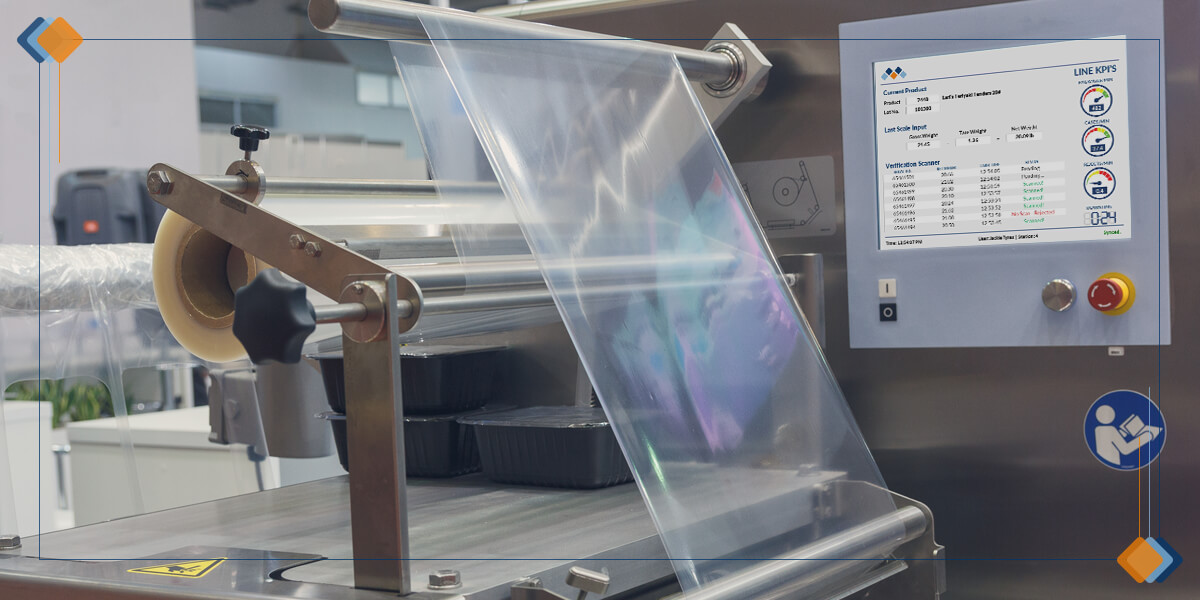
Food Industry MES System vs ERP Software
A food industry MES system gives manufacturers better plant floor visibility, production control, and real-time operational data than ERP software alone.
Many food manufacturers eventually invest in ERP systems to manage inventory, purchasing, accounting, and business operations. However, as production environments become more complex, manufacturers often discover that traditional ERP systems do not fully support plant floor manufacturing requirements.
While many ERP platforms offer manufacturing modules, food manufacturing operations require specialized functionality that generic ERP systems often struggle to provide.
Why a Food Industry MES System Is Different
A food industry MES system is purpose-built for plant floor production management and real-time manufacturing data collection.
Unlike ERP systems, MES platforms focus directly on production operations, operator workflows, equipment integration, traceability, and manufacturing performance.
Food manufacturing environments involve unique operational challenges, including:
- Variable catch-weight products
- Shelf-life management
- Batch and lot traceability
- Real-time production tracking
- Raw material variability
- Food safety compliance requirements
These operational demands require software specifically designed for food manufacturing production environments.
User-Friendly Operator Interfaces Improve Adoption
Plant floor software must be easy for operators to use during fast-moving production runs.
If systems are difficult to navigate or slow to use, operators often avoid them or enter incomplete information.
A food industry MES system focuses heavily on:
- Simple operator workflows
- Fast data entry
- Clear production screens
- Easy barcode scanning
- Real-time production visibility
This improves system adoption while helping manufacturers collect more accurate production data.
Equipment Integration Improves Real-Time Visibility
Modern food manufacturing equipment generates valuable production data throughout the facility.
A food industry MES system integrates directly with equipment such as:
- Barcode scanners
- Dynamic scales
- Vision systems
- Temperature probes
- X-ray machines
- Production counters
This allows manufacturers to automatically capture production data in real time instead of relying on manual data entry.
As a result, manufacturers improve:
- Production visibility
- Data accuracy
- Throughput monitoring
- Quality control
- Production efficiency
Automated equipment integration also helps reduce human error throughout production operations.
Offline Capability Reduces Downtime Risk
Production downtime creates significant operational costs for food manufacturers.
Many ERP systems depend heavily on continuous network connectivity. If the network fails, production processes may stop entirely.
A food industry MES system often includes offline operating capability that allows production to continue even during temporary network interruptions.
This helps manufacturers:
- Reduce production downtime
- Maintain production continuity
- Prevent data loss
- Improve operational reliability
Offline capability is especially important in fast-paced production environments where every minute of downtime affects profitability.
Food Manufacturing Requires Specialized Functionality
Food manufacturing operations differ significantly from many other industries.
ERP systems designed for general manufacturing often struggle with food-specific operational requirements such as:
- Catch-weight inventory
- Shelf-life tracking
- Recipe management
- Yield management
- Batch traceability
- Production variability
A food industry MES system includes specialized functionality designed specifically for these production environments.
This helps manufacturers improve operational accuracy while reducing inventory and production management challenges.
MES Modules Align with Production Processes
Food industry MES systems also provide modules designed around real production workflows.
These may include:
- Receiving management
- Recipe management
- SPC monitoring
- Traceability tracking
- Labeling systems
- Inventory management
- Production scheduling
Purpose-built MES modules improve efficiency because they match how food manufacturers actually operate on the production floor.
Why MES Systems Deliver Better Long-Term Value
Many manufacturers attempt to extend ERP systems down to the production floor to avoid purchasing additional software.
However, customizing ERP systems for plant floor operations often becomes costly, time-consuming, and difficult to maintain.
A food industry MES system provides manufacturers with specialized functionality already designed for food production environments.
This reduces implementation complexity while improving production visibility, traceability, and operational efficiency.
Final Thoughts
A food industry MES system helps manufacturers improve plant floor visibility, production tracking, traceability, and operational efficiency far beyond what ERP systems alone typically provide.
By implementing purpose-built MES software, food manufacturers gain real-time operational control while improving production accuracy, compliance, and decision-making.
At Matrix Controls, we help food manufacturers improve operational performance with MES-style production management solutions designed specifically for real-world food manufacturing environments.