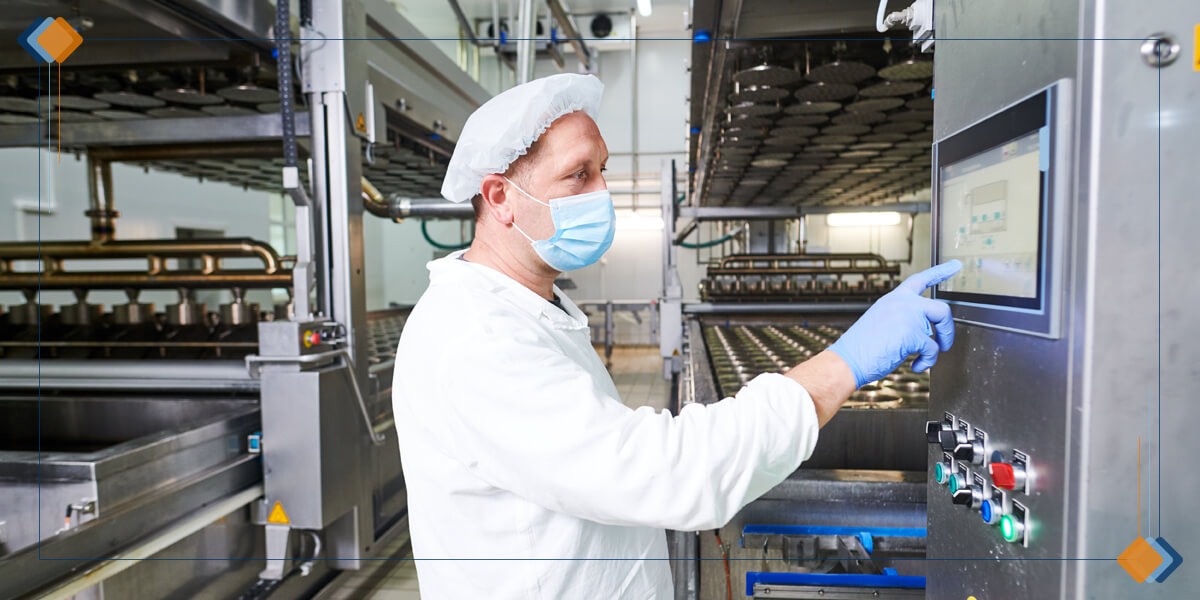
Improving OEE Performance in Food Manufacturing
Improving OEE performance helps food manufacturers reduce downtime, increase throughput, and improve overall production efficiency.
With competition growing and profit margins remaining tight, food manufacturers constantly search for ways to improve operational performance. One of the most effective ways to improve production efficiency involves reducing downtime across manufacturing operations.
Overall Equipment Effectiveness (OEE) helps manufacturers measure how efficiently production equipment and processes perform throughout the facility.
What OEE Measures in Food Manufacturing
OEE measures the effectiveness of manufacturing operations by evaluating three major factors:
- Equipment availability
- Production throughput
- Product quality
Production downtime directly affects OEE performance because equipment cannot produce while lines are stopped.
Even short periods of downtime reduce throughput, delay production schedules, and impact profitability.
Fortunately, many downtime causes are measurable and preventable when manufacturers implement better production processes and real-time visibility tools.
Optimize Production Scheduling to Reduce Downtime
Frequent production changeovers often create unnecessary downtime.
Manufacturers can improve OEE performance by organizing production schedules to reduce changeover frequency whenever possible.
For example, facilities may improve efficiency by:
- Running larger production batches
- Producing similar products consecutively
- Reducing packaging changeovers
- Grouping products with similar ingredients
Reducing changeover frequency helps manufacturers increase available production time while minimizing unnecessary line stoppages.
Stage Changeover Supplies Before Production Stops
Every minute of downtime affects production throughput and OEE performance.
Manufacturers often lose valuable production time waiting for packaging materials, labels, or production supplies during product changeovers.
Pre-staging supplies before changeovers begin helps reduce these delays.
This may include preparing:
- Packaging materials
- Label stock
- Production tooling
- Product-specific supplies
- Backup printing equipment
By organizing materials in advance, manufacturers shorten downtime and improve overall production flow.
Preventative Maintenance Improves Equipment Reliability
Equipment failure remains one of the most common causes of unplanned downtime in food manufacturing.
Preventative maintenance programs help manufacturers reduce unexpected equipment failures before they disrupt production.
Production and maintenance teams can monitor:
- Machine performance
- Throughput trends
- Equipment age
- Load conditions
- Maintenance history
Using this information, manufacturers can schedule maintenance during planned downtime instead of reacting to unexpected breakdowns.
As a result, facilities reduce production interruptions while improving equipment reliability and OEE performance.
Automation Helps Improve Production Flow
Many food manufacturing processes still depend heavily on manual labor.
However, labor-intensive processes often create production bottlenecks and inconsistent production flow.
Strategic automation helps manufacturers:
- Improve consistency
- Reduce bottlenecks
- Increase throughput
- Reduce manual handling
- Improve line efficiency
Automating repetitive or high-volume tasks also helps reduce production slowdowns caused by labor shortages or inconsistent workflows.
Micro Downtime Tracking Identifies Hidden Problems
Large downtime events are usually easy to identify and investigate.
However, small production interruptions often go unnoticed even though they may collectively create significant production losses.
Micro downtime tracking helps manufacturers identify recurring short-duration production interruptions using real-time production analytics.
For example, manufacturers may monitor:
- Gaps between production transactions
- Frequent short line stoppages
- Repeated equipment pauses
- Delayed product flow events
By identifying recurring patterns, manufacturers can isolate root causes and continuously improve production performance.
Over time, reducing micro downtime creates measurable improvements in OEE performance.
Real-Time Production Data Improves OEE Visibility
Real-time production reporting gives manufacturers better visibility into downtime causes, throughput performance, and operational inefficiencies.
MES-style production monitoring systems help teams:
- Track downtime events in real time
- Analyze production performance
- Monitor throughput trends
- Improve operational decision-making
- Identify recurring production issues
This visibility helps manufacturers make faster improvements while supporting long-term operational efficiency goals.
Final Thoughts
Improving OEE performance requires manufacturers to reduce downtime, improve production visibility, and optimize manufacturing processes across the facility.
By improving scheduling, reducing changeover delays, implementing preventative maintenance, and tracking downtime more effectively, food manufacturers can significantly improve production efficiency and profitability.
At Matrix Controls, we help food manufacturers improve OEE performance with MES-style production monitoring and analytics solutions designed for real-world manufacturing environments.