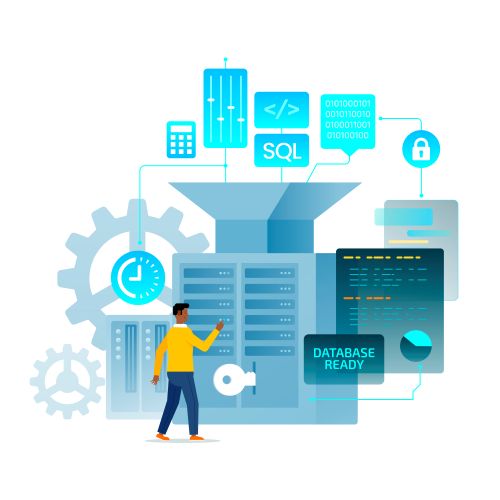
How Food Manufacturing MES Software Connects Operations
Food manufacturing MES software helps processors connect production, inventory, traceability, and operational data into one centralized system. Many food manufacturers still rely on disconnected tools such as spreadsheets, paper logs, ERP systems, and standalone production software to manage daily operations.
While each tool may serve a purpose, disconnected systems create inefficiencies across the production floor. Teams often enter the same information multiple times, transfer data manually between departments, and spend valuable time searching for missing or outdated records. As a result, operations slow down, visibility decreases, and the risk of costly errors increases.
In today’s fast-paced food industry, manufacturers need real-time access to accurate production data. Without connected systems, it becomes difficult to maintain efficiency, support compliance, and scale operations effectively.
The Problems Created by Disconnected Systems
Many food processors rely on separate systems to manage production, inventory, quality assurance, labeling, and reporting. Although these systems may function independently, they rarely communicate effectively with one another.
Because of this, production teams often work with incomplete or outdated information. Employees may manually transfer data between spreadsheets, ERP systems, and paper records, which increases the likelihood of inconsistencies and delays.
In addition, disconnected systems create several operational challenges:
- Duplicate manual data entry
- Limited real-time visibility
- Delayed production reporting
- Inconsistent inventory information
- Increased compliance risks
- Slower production planning and scheduling
Over time, these inefficiencies become more expensive and more difficult to manage as operations grow.
How Food Manufacturing MES Software Connects Operations
Modern food manufacturing MES software eliminates these gaps by bringing production and traceability data into one connected platform. Instead of relying on disconnected tools, manufacturers can capture, manage, and share information in real time across the entire operation.
Our MES-style traceability platform helps manufacturers:
- Capture real-time data from receiving through shipping
- Centralize production, inventory, and lot tracking into one system
- Eliminate manual transfers between spreadsheets and paper logs
- Improve communication between production, QA, and operations teams
- Integrate ERP systems with real-time production execution
- Support scalable operations across multiple lines and facilities
As a result, manufacturers gain a clearer and more connected view of daily operations.
Real-Time Visibility Improves Decision-Making
When systems work together, managers can access accurate information instantly instead of waiting for reports or manually updated spreadsheets.
Real-time visibility allows teams to:
- Monitor production activity as it happens
- Track inventory and lot movement instantly
- Identify bottlenecks faster
- Respond quickly to production issues
- Improve scheduling accuracy
Because teams work from the same live data, decisions become faster, more accurate, and more reliable.
Reduced Manual Data Entry Improves Accuracy
Manual data entry slows operations down and creates unnecessary opportunities for human error. Employees often spend valuable time entering the same information into multiple systems instead of focusing on production.
Food manufacturing MES software reduces this burden by capturing data directly from the production floor. Operators can scan ingredients, record yields, complete checks, and update inventory in real time from their workstation.
In addition, automated data collection helps eliminate inconsistencies between departments. This improves inventory accuracy, strengthens traceability, and simplifies audit preparation.
Why Connected Operations Scale More Easily
As food manufacturing operations grow, disconnected systems become increasingly difficult to manage. New production lines, facilities, and customers create additional complexity that outdated systems struggle to support.
Connected MES software provides the flexibility manufacturers need to scale efficiently. Instead of adding more spreadsheets or manual processes, teams can manage growth through one centralized platform.
Over time, connected operations improve productivity, reduce delays, and create stronger coordination across departments. Most importantly, manufacturers gain the visibility and control needed to grow with confidence.
Final Thoughts
Disconnected systems create unnecessary inefficiencies across food manufacturing operations. Manual data transfers, limited visibility, and inconsistent reporting slow production down and make it harder to maintain accuracy and compliance.
Food manufacturing MES software solves these challenges by connecting production, inventory, traceability, and operational data into one centralized platform. With real-time visibility, improved accuracy, and streamlined workflows, manufacturers can operate more efficiently while preparing their operations for future growth.
At Matrix Controls, we help food manufacturers modernize their operations with MES-style traceability solutions designed for real-world production environments. By connecting systems and simplifying data flow, we help teams improve efficiency, strengthen traceability, and make smarter operational decisions every day.